
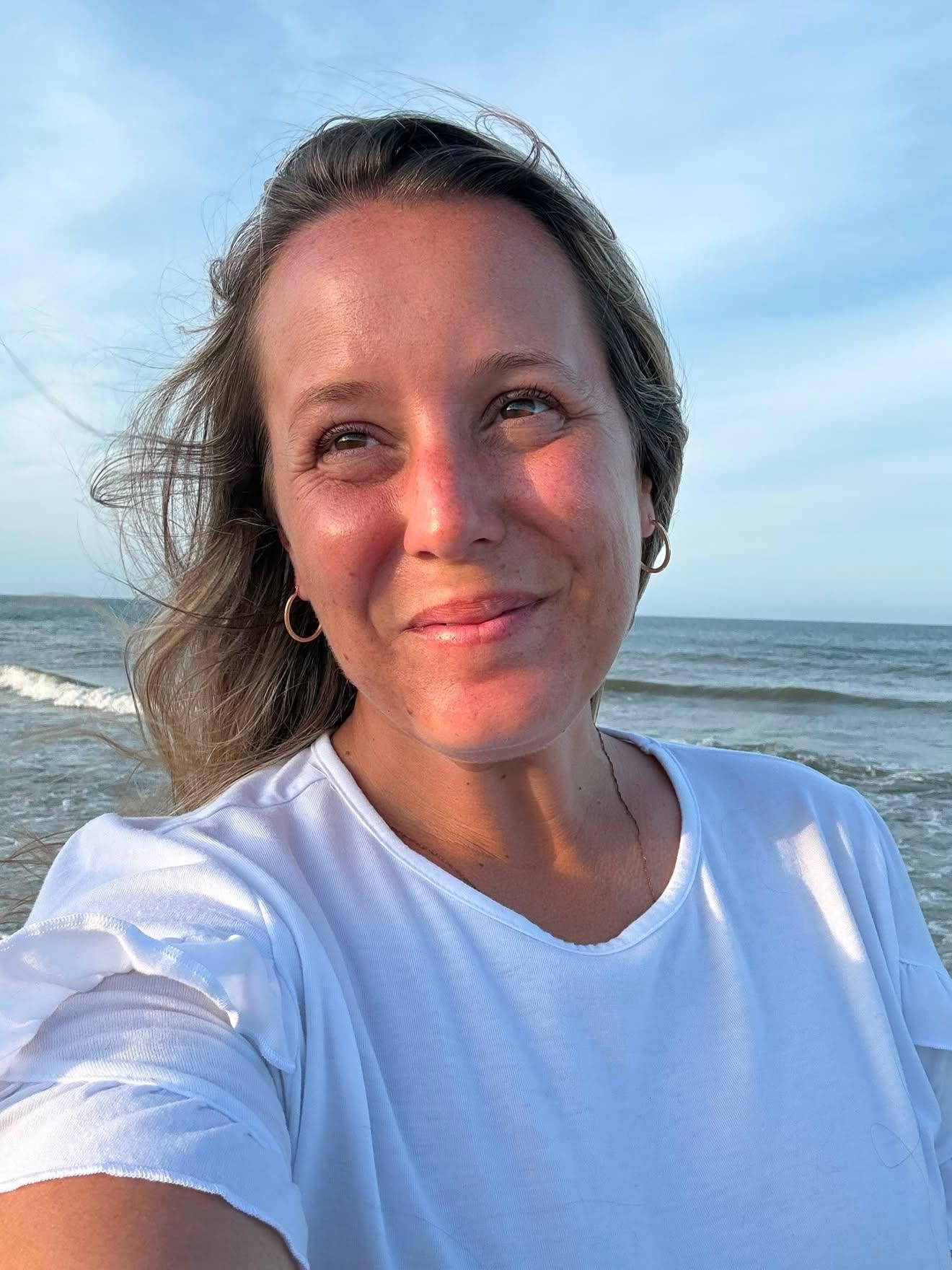
Courtney, 37, Reading, PA
Generalized Anxiety Disorder, Major Depressive Disorder, Panic Disorder and Unspecified Mood Disorder
I’ve always been the poster child for the eldest daughter. Stereotypical, you know the one who likes to keep the peace, no conflict whatsoever. Lots of control issues, perfectionism, you name it. But I started experiencing severe anxiety and panic attacks after my dad suddenly passed away when I was only about 22-23 years old.

All of the sudden I was the executor of an estate and I had to make all of these really important decisions while trying to keep it together for my family, but also managing how I was feeling about everything around his death. And that’s something I wish upon no one, especially a 23-year-old who had already had a complicated relationship with her dad. So that’s where the anxiety started; it’s the depression that came a bit later. I think it has always been there, or at the very least a mood disorder.
It started to get really bad after I was divorced around 32-years old, also around the time of COVID. My coping skills were so bad; I was drinking way too much, not getting enough rest, I was stuck in a job causing me crippling anxiety, eating like shit, just really not taking care of myself at all. I spent a lot of time just floating through my life, trying to help others but absolutely refusing to help myself. I think a lot of people in my life were concerned about me, but they just didn’t know how to help the person who was always helping everyone else.

At the peak of my anxiety, I was obsessed with bad things happening. And then when they did happen, it would reinforce my belief that bad things always happen. It was a type of self-fulfilling prophecy and cycle that I just couldn’t get out of. Also with anxiety, I felt, and sometimes even still feel, physically ill. Like I get a pit in my stomach just from being anxious, which is often accompanied by being agitated, being shorter, less patient, and overall just not a fun person to be around. I really try to just prevent it from happening; it still does, but one thing I’m working on in therapy is pinpointing those emotions and where I’m feeling them in my body. So that’s one thing I am actively working on right now.
I think that I’m a little bit lucky in the sense that people have not really treated me differently due to my mental health concerns. I only recently started opening up about my mental health and I was really good about hiding everything I was going through; I was always able to advocate for other people’s mental health, just never my own.
I didn’t realize then, even as an adult healthcare professional, that not caring if I didn’t wake up in the morning was a sign of passive suicidal ideation,
and that was one hell of a wake up call.

I did take some shit from family members, especially for taking medication, which is a stigma I believe is still very much present in society today. I’m definitely looking to change that, and I would way rather still be here on earth than being ashamed or embarrassed about taking a few little pills. I started my career as a medication-as-a-last-resort type of professional. But I am not all in on the meds, and I think balancing out your brain chemistry by far outweighs all of the cons.
The turning point for me was, a little over a year ago, my soul dog, Lucy, was diagnosed with cancer, and she was given a prognosis of 2-4 months to live. I was so devastated and completely paralyzed about what to do next and how to proceed and what decisions to make. And I was full on ready to put this 10-year-old dog through chemo, until one day I woke up and I was like “Courtney, what the fuck are you thinking? That is…so selfish!” And so I kind of made the decision from that moment that I was going to enjoy every single second that I had left with my dog. I decided I was going to go all-in on taking care of myself.

I decided I was done coping by using alcohol, and I decided to face life head-on no matter how painful it was going to be. I knew that my dog was going to die, and my last gift to her was going to be getting my life back. As a side note, Lucy ended up living for 7 months after she was diagnosed, and I truly believe that me getting my life together, getting my life back, taking care of myself contributed to the extra time that I got with her.
The biggest advice I can give as both a mental health professional and someone who also cares a hell of a lot about other people is to amp up your self-care routine, your coping skills, your hobbies, etc. Become so in tune with what you need on a good day so on a bad day, it is almost second nature to full-stop everything and take care of yourself.
It’s cliche to say “You can’t pour from an empty cup,” but I truly, actually, wholeheartedly believe that.

Other advice that I have would be to get a therapist, get a psychiatrist or a nurse practitioner. Cut the people from your life who are not serving you in a positive way. And just make a commitment to yourself to work your ass off to be the best version of you, whatever that looks like.
What I’d tell someone that feels completely alone is really simple, and that is…you aren’t. So many people in the world feel the way that you do, and there’s someone out there who has gotten through it, who wants to talk about it, who cares about you, who wants the best for you. You just have to find those people. But I PROMISE YOU, they are out there.
This is the part where I remind you that there are suicide and crisis hotlines where you will see and you will hear that there are people who have never met you that care a fuck-ton about you.
If this story resonated with you in any way, please leave a comment for Courtney below. Are you mental? So are we. YOU are not alone 🧡